Actor class
Mass movements & campaign coalitions
Broad participant coalitions whose leverage may come from turnout, legitimacy, labor, noncooperation, elections, or institutional defections rather than a single organization.
A complete revolution reference cannot filter the historical record through a nonviolence, legality, or institutional-approval test. State and non-state actors, armed and unarmed organizations, insurgencies, extremist movements, civil society, and institutions are studied under one evidentiary standard.
A neutral research taxonomy for comparing mass movements, political organizations, armed actors, security forces, civil-society networks, labor, business, media, diaspora, foreign states, and local authorities without treating any single category as the whole system.
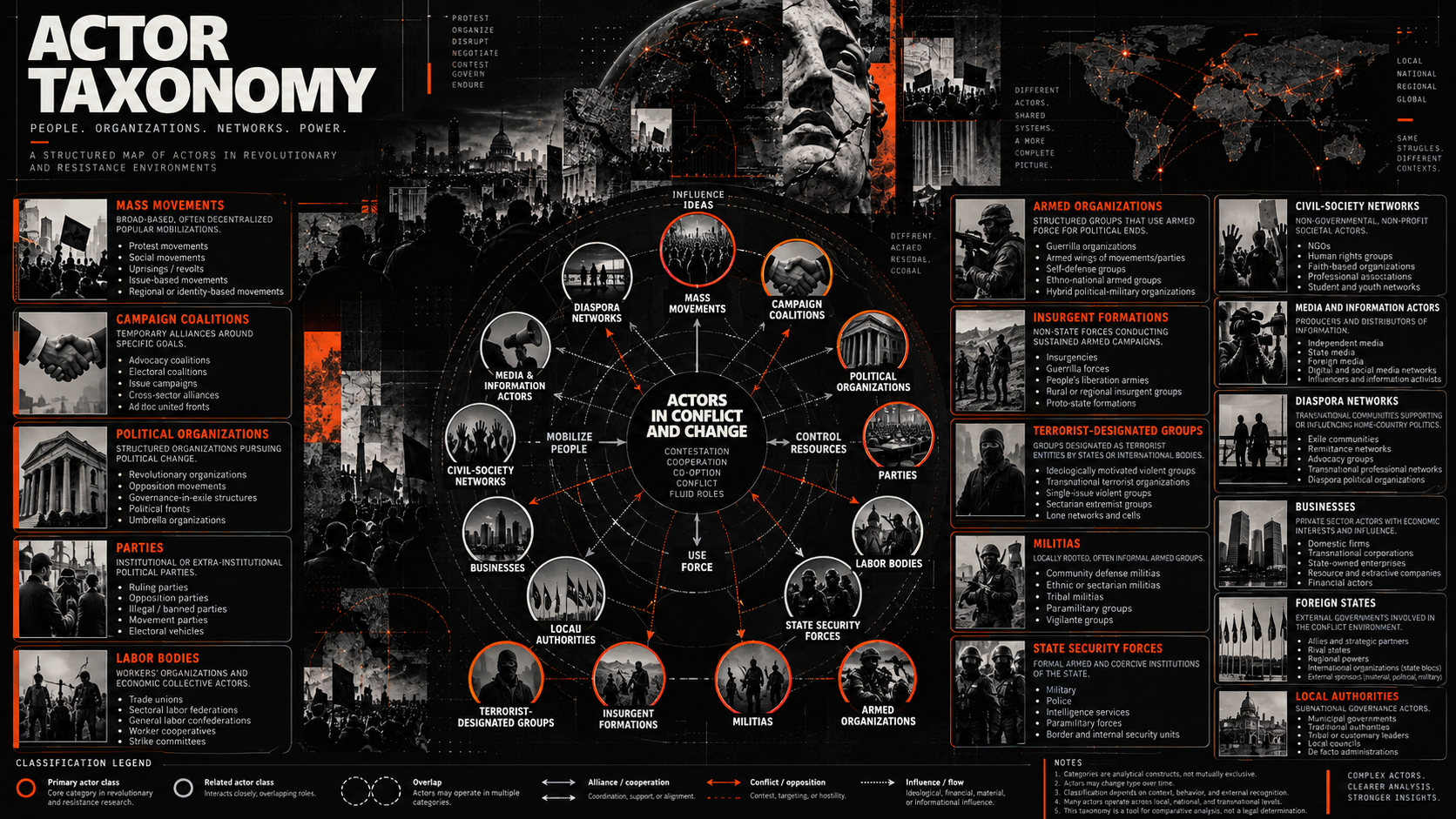
Built To Resist examines ideology, organization, violence, repression, legal status, internal debate, institutional response, and outcomes. It does not provide recruitment, targeting, weapons, sabotage, clandestine access, evasion, or operational escalation instruction.
Broad participant coalitions whose leverage may come from turnout, legitimacy, labor, noncooperation, elections, or institutional defections rather than a single organization.
Open →Actor classOrganizations seeking major constitutional, social, national, or regime transformation through electoral, extra-parliamentary, clandestine, or mixed political work.
Open →Actor classOrganizations that use organized armed force for revolutionary or liberation objectives. Armed status is descriptive; it does not by itself establish terrorism, legitimacy, illegitimacy, or popular support.
Open →Actor classNon-state armed actors conducting sustained irregular conflict against state forces or rival authorities. Analysis centers on political aims, support, territorial control, state response, civilian effects, and outcomes—not tactical emulation.
Open →Actor classActors designated under a specific government or international legal regime. BuiltToResist records issuer, date, jurisdiction, scope, and relevant disputes; designation is metadata, not a substitute for describing conduct or ideology.
Open →Actor classSub-organizations or breakaway factions whose methods differ from the broader movement. This category prevents a small violent wing from being silently projected onto an entire coalition.
Open →Actor classArmed formations outside ordinary standing armed forces, including state-aligned, partisan, communal, revolutionary, or self-defense formations. Legal status and command relationship must be specified.
Open →Actor classMilitary, police, gendarmerie, Guard, intelligence, and other coercive institutions. State actors receive the same evidentiary scrutiny for violence, repression, civilian harm, legality, and command responsibility as non-state actors.
Open →Actor classCivilian or organized actors mobilizing against revolutionary, liberation, protest, or opposition movements. Their role can include electoral action, demonstrations, information campaigns, vigilantism, or violence.
Open →Actor classCouncils, provisional governments, liberated-zone administrations, autonomous institutions, or rival authorities that claim governing capacity alongside or against an existing state.
Open →Actor classUnions, professional associations, worker committees, and occupational networks whose significance comes from organized economic or administrative leverage.
Open →Actor classChurches, universities, student organizations, rights groups, neighborhood networks, civic associations, and mutual-aid institutions that can supply legitimacy, communication, mediation, or organization.
Open →Actor classExternal communities, solidarity organizations, lobbying networks, fundraising networks, and transnational media or advocacy systems. Analysis distinguishes political support from material or military support.
Open →Actor classForeign governments, proxies, intelligence services, diplomatic sponsors, or military patrons. Their role is disaggregated into recognition, sanctuary, finance, arms, sanctions, mediation, information activity, and direct intervention.
Open →Actor classBusinesses, banks, insurers, logistics firms, contractors, investors, and payment systems whose behavior can affect practical sovereignty, continuity, bargaining pressure, or recovery.
Open →Actor classJournalists, broadcasters, underground presses, state media, platforms, influencers, propagandists, fact-finders, and foreign amplification networks. Reach, authenticity, coordination, sponsorship, and behavioral effect are evaluated separately.
Open →Broad participant coalitions whose leverage may come from turnout, legitimacy, labor, noncooperation, elections, or institutional defections rather than a single organization.
Organizations seeking major constitutional, social, national, or regime transformation through electoral, extra-parliamentary, clandestine, or mixed political work.
Organizations that use organized armed force for revolutionary or liberation objectives. Armed status is descriptive; it does not by itself establish terrorism, legitimacy, illegitimacy, or popular support.
Non-state armed actors conducting sustained irregular conflict against state forces or rival authorities. Analysis centers on political aims, support, territorial control, state response, civilian effects, and outcomes—not tactical emulation.
Actors designated under a specific government or international legal regime. BuiltToResist records issuer, date, jurisdiction, scope, and relevant disputes; designation is metadata, not a substitute for describing conduct or ideology.
Sub-organizations or breakaway factions whose methods differ from the broader movement. This category prevents a small violent wing from being silently projected onto an entire coalition.
Armed formations outside ordinary standing armed forces, including state-aligned, partisan, communal, revolutionary, or self-defense formations. Legal status and command relationship must be specified.
Military, police, gendarmerie, Guard, intelligence, and other coercive institutions. State actors receive the same evidentiary scrutiny for violence, repression, civilian harm, legality, and command responsibility as non-state actors.
Civilian or organized actors mobilizing against revolutionary, liberation, protest, or opposition movements. Their role can include electoral action, demonstrations, information campaigns, vigilantism, or violence.
Councils, provisional governments, liberated-zone administrations, autonomous institutions, or rival authorities that claim governing capacity alongside or against an existing state.
Unions, professional associations, worker committees, and occupational networks whose significance comes from organized economic or administrative leverage.
Churches, universities, student organizations, rights groups, neighborhood networks, civic associations, and mutual-aid institutions that can supply legitimacy, communication, mediation, or organization.
External communities, solidarity organizations, lobbying networks, fundraising networks, and transnational media or advocacy systems. Analysis distinguishes political support from material or military support.
Foreign governments, proxies, intelligence services, diplomatic sponsors, or military patrons. Their role is disaggregated into recognition, sanctuary, finance, arms, sanctions, mediation, information activity, and direct intervention.
Businesses, banks, insurers, logistics firms, contractors, investors, and payment systems whose behavior can affect practical sovereignty, continuity, bargaining pressure, or recovery.
Journalists, broadcasters, underground presses, state media, platforms, influencers, propagandists, fact-finders, and foreign amplification networks. Reach, authenticity, coordination, sponsorship, and behavioral effect are evaluated separately.